 Break Out of the Box
Revise Creative Work Without Starting Over
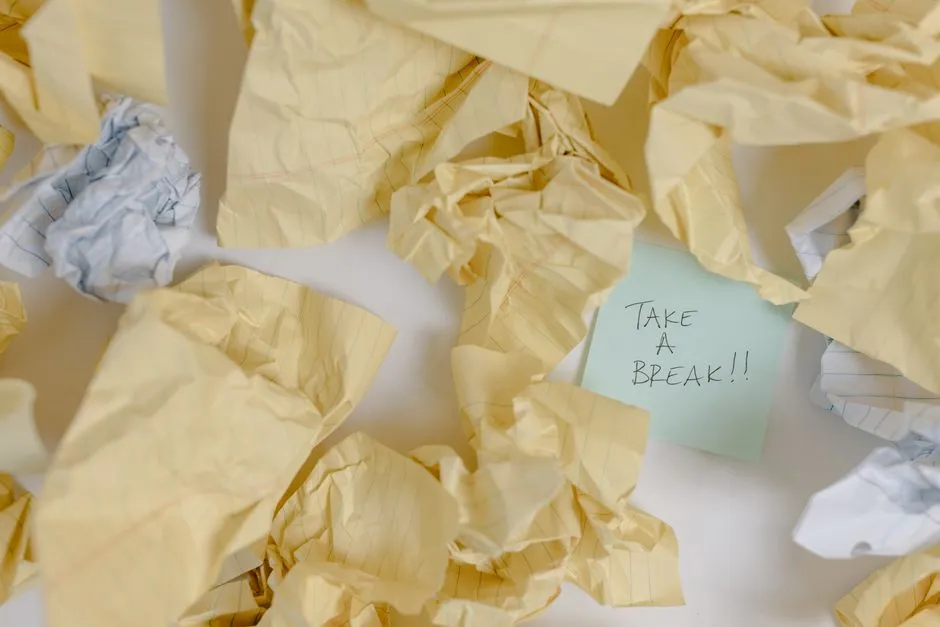
- Revise Creative Work Without Starting Over
- Preserve a Baseline Before You Revise
- Define One Revision Question
- Inventory What Still Works
- Map the Smallest Structural Change
- Test on a Copy, Not the Only Original
- Compare the Effect, Not the Effort
- Merge the Winning Change Carefully
- Know When Starting Over Is Actually Necessary
- A Revision Pass You Can Repeat
- Sources
Revise Creative Work Without Starting Over
To revise creative work without starting over, preserve the current version, state one problem the revision must solve, and mark each part keep, change, or unknown. Test structural alternatives on copies rather than rebuilding the whole project. Compare each test with the same audience-and-effect question, merge only the change that helps, and keep removed material in a separate holding file.
Starting over can feel cleaner because it removes the need to choose. It also discards decisions that may still be doing useful work. Revision is the more exacting task: discover what already succeeds, locate the failure that matters, and change enough to solve it without casually unmaking the rest.
Preserve a Baseline Before You Revise
Make a recoverable baseline. For digital work, duplicate the project or create a clearly named version before editing. For physical work, photograph the current arrangement and label removable parts or samples without altering them. Record which version is the baseline and which is the working copy.
The Library of Congress advises people preserving digital files to identify and organise what should be saved and to keep copies on at least two different storage media in separate physical locations. That guidance concerns preservation rather than creative revision, but it supports a useful boundary: an editable working file is not the only copy of the work.
Do not use the revision as an excuse to improvise unfamiliar repairs. Mains electrical work, structural fixing, suspended objects, hazardous materials, eye-safety procedures and specialist conservation belong with the relevant instructions and a qualified person. Test risky-looking physical changes through drawings, mock-ups or appropriate professional review, not by experimenting on the only original.
Define One Revision Question
“Make it better” is not a revision brief. Better for whom, and in what way? Write one question that links an observed problem to the experience the project is meant to create.
- Does the opening give the reader enough context to understand the central choice?
- Can a viewer see the main visual relationship before the supporting detail?
- Does the sequence build tension before the release?
- Can a user complete the main task without leaving the screen to find an explanation?
- Does the object’s form support the way it is meant to be handled or displayed?
Name the evidence behind the question. It might come from your own review, a collaborator’s note, a reader’s confusion or a failed material test. If the evidence is feedback, separate the reported effect from the reviewer’s proposed fix. “I could not tell why the character left” identifies an experience; “add a flashback” is one possible solution.
The University of North Carolina Writing Center distinguishes revision—rethinking purpose, evidence and organisation—from later editing and proofreading. Its guidance is specifically about writing, but the distinction travels well: solve the project-level question before polishing details that a structural change may remove.
Inventory What Still Works
Review the baseline once without editing. Divide the work into meaningful units: scenes, sections, images, screens, movements, tracks, components or stages. For each unit, record its job and assign one status:
| Status | Meaning | Action now |
|---|---|---|
| Keep | It supports the purpose and is not part of the identified problem | Protect it from unrelated changes |
| Change | Evidence connects it to the revision question | Include it in the test |
| Unknown | Its value depends on another decision or on the new structure | Hold it until the test answers that dependency |
Add a fourth note for material that is strong but belongs elsewhere. A paragraph can be good and still interrupt this essay. A shot can be beautiful and still flatten this sequence. Moving such material to a labelled holding file makes removal reversible without pretending it remains in the work.
For a written draft, a reverse outline can expose structure without rewriting the prose. Purdue Writing Lab’s current activity asks writers to identify the document’s main point, list each paragraph’s main idea and state how each relates to the whole. Adapt the same logic to another medium by naming what each unit contributes. A sequence of thumbnails, track labels or screen cards can reveal repetition, missing steps and misplaced emphasis.
Map the Smallest Structural Change
Now draw the existing structure in a form cheap to move. Use index cards for scenes, thumbnail boxes for images, a simple flow for screens, a track list for audio or labelled shapes for physical components. Work at the level of relationships, not surface finish.
Generate two or three alternatives that answer the same revision question. Keep one close to the baseline. Let another move, combine or remove a major unit. A third may replace the function rather than the material: a diagram instead of a long explanation, a recurring sound instead of an extra scene, or one visible control instead of several instructions.
The Design Council’s Framework for Innovation describes developing multiple possible answers and then testing solutions at small scale, rejecting those that do not work and improving those that do. This article adapts that principle to revision; it is not a claim that every creative medium follows one universal design process.
Avoid changing the question to make a favourite alternative win. If a new test reveals that the original question was wrong, write a new question explicitly and begin a separate comparison. Otherwise revision becomes a moving target with excellent stationery.
Test on a Copy, Not the Only Original
Build the cheapest honest representation of each alternative. It must show the relationship being tested, not every finished detail.
- Writing: duplicate the draft, move headings or scene summaries first, then rewrite only the joins needed to read the new order.
- Visual work: rearrange thumbnails, low-resolution copies or photographs before cutting, mounting or painting over original material.
- Audio or video: duplicate the sequence, use temporary edits and preserve source media outside the test timeline.
- Digital products: test a non-production prototype or branch; do not alter live systems, access controls or user data for a creative experiment.
- Objects or installations: use drawings, scale models or reversible mock-ups. Structural, electrical, suspension and public-safety decisions require appropriate professional review.
Label every test with the same information: baseline version, revision question, change made and result observed. This prevents a promising experiment from becoming an anonymous file called FINAL-new-2.
Compare the Effect, Not the Effort
Assess each version against the question you wrote. A large amount of labour does not make a change more useful, and a quick rearrangement is not automatically superficial.
Use a compact comparison:
- What became clearer, stronger or easier to follow?
- What useful effect from the baseline was lost?
- Which new dependency or contradiction appeared?
- Does the change solve the named problem or merely make the work different?
- What evidence would justify keeping or rejecting it?
If you need outside feedback, show reviewers the baseline and one test under the same question. Do not ask which version they “like” in general. Ask what they understood, noticed or expected at the relevant point. Record their observations before deciding what to merge.
When comparison produces too many possible directions, use a defined reframing method on the revision question itself. When you know the change but cannot begin it, diagnose the practical block rather than discarding the project.
Merge the Winning Change Carefully
Choose the alternative that best answers the revision question while preserving the project’s necessary strengths and obligations. Merge it into a new working version; do not silently overwrite the baseline.
After the merge, check the joins. Structural revision creates local work: transitions, references, timing, continuity, navigation, credits and dependencies may need repair. Search for material that still points to a removed section or earlier order. Confirm that source attributions, licences, permissions and collaborator credits survived the move.
Keep the holding file outside the active work. Name each item by what it is and why it was removed. Reuse it only when it performs a needed job in the revised project; do not restore it merely because deleting it felt expensive.
Finally, close this revision question. Write what changed, which evidence supported the decision and what remains intentionally untouched. A later revision may ask a different question, but it should not quietly reopen this one because the work is available to tinker with.
Know When Starting Over Is Actually Necessary
This method protects usable work; it does not require saving a structure that cannot serve the purpose. A clean rebuild may be justified when the project’s purpose has fundamentally changed, the underlying file or material is unusable, the rights needed for the current form are unavailable, or every tested structure preserves the same central failure.
Even then, inventory before rebuilding. Keep source material you have the right and practical ability to reuse, preserve the old version as a reference, and write why the rebuild is necessary. Starting over should be the result of comparison, not the price of avoiding one difficult revision decision.
A Revision Pass You Can Repeat
- Preserve and name the baseline.
- Write one audience-and-effect revision question.
- Inventory units as keep, change or unknown.
- Move strong but misplaced material to a holding file.
- Map two or three structural alternatives.
- Test each alternative on a copy or reversible model.
- Compare every test against the same question.
- Merge the winning change into a new version.
- Repair joins, references, rights and credits.
- Record the decision and close the revision question.
Revision is not loyalty to every existing part, and it is not demolition for the pleasure of a clean page. It is controlled change: preserve the evidence, ask a precise question, and let the answer determine what moves.
Sources
- University of North Carolina Writing Center: Revising Drafts
- Purdue Writing Lab: Genre Analysis and Reverse Outlining
- Design Council: Framework for Innovation
- Library of Congress: Reformatting, Digitizing, and Digital Preservation FAQ
Frequently asked questions
How do I know what to keep when revising creative work?
Name the project’s purpose and one revision question, then record the job performed by each section or component. Keep material that supports the purpose and is not implicated in the problem. Mark dependent material unknown, and move strong but misplaced material to a separate holding file so removal remains reversible.
Should I edit the original project file?
No. Preserve and clearly name a baseline, then create a working copy, branch or reversible mock-up. This lets you compare the proposed change with the existing work and recover useful material. Physical projects should be photographed before alteration, and hazardous or specialist work should follow the relevant instructions and qualified professional guidance.
What is the difference between revision and editing?
Revision changes purpose, structure, sequence, emphasis or evidence to improve how the whole work functions. Editing improves expression and consistency within that structure, while proofreading catches final surface errors. Address the project-level revision question before polishing material that a structural change may remove.
How many revision options should I test?
There is no universal number, but two or three clearly different alternatives are often enough to compare a conservative change with a larger structural move. Keep the revision question constant, build only the detail needed for an honest test, and stop generating options once one solves the named problem without creating a worse one.
When is starting over better than revising?
A rebuild may be justified when the purpose has fundamentally changed, the underlying material is unusable, required rights are unavailable or every tested structure preserves the same central failure. Inventory the old version first, preserve reusable material and record why revision could not solve the problem.